
A kitchen sink can look clean while a sour, musty, or sewer-like smell keeps coming back. This happens because the visible bowl is only one small part of the drain system. Food film, grease, trapped water, and pipe buildup can sit where a sponge cannot reach. In some homes, the smell comes from a dry trap or a vent problem instead of dirt. That difference matters because surface cleaning will not fix a plumbing cause.
A useful approach is to find where the odor starts, clean the hidden areas, and watch for signs of a deeper issue. If the smell returns quickly, drains slowly, or comes with gurgling, the sink may need more than routine cleaning. Knowing the common odor sources helps property owners avoid wasted effort and choose the right fix.
Hidden Areas Around the Drain Can Hold Food Odors
Many sink smells start above the drain, not deep inside the pipe. A dark, damp layer can form under parts that rarely get scrubbed. Food scraps and soap film feed bacteria, so odor may return soon after the sink bowl is cleaned.
The Splash Guard Underside
The rubber splash guard on a disposal can trap grease and food under its flaps. The top may look clean while the underside stays coated.
The Garbage Disposal Blades
Food can cling inside the disposal chamber and around moving parts. The odor grows stronger when scraps stay wet for hours.
- Lift safe removable parts only when the unit is off.
- Use a brush to reach under rubber surfaces.
- Never place hands inside a garbage disposal.
A clean-looking drain opening does not prove the hidden parts are clean.
The Bend Below the Sink Can Hold More Than Water
The P-trap bend holds water by design. That water blocks sewer gas from moving into the room. However, the same bend can collect grease, rice, coffee grounds, and soft food bits.
Over time, that mix can smell even when water still drains. The drain pipe walls can create a similar problem. Grease coats the inside surface, while small particles stick to that film. Because this buildup sits beyond the sink bowl, wiping the drain opening does very little.
Slow drainage can make the smell stronger because dirty water stays in the pipe longer. A sink that smells and drains slowly may have more buildup than a sink with odor alone. For that reason, cleaning should focus on the drain path rather than only the visible metal.
A Dry Trap or Vent Problem Can Smell Like Sewage
A sink that has not been used for a while may lose the water inside its P-trap. Once that water seal dries out, sewer gas can move through the drain. Running water for a short period may refill the trap and stop the smell. However, vent trouble can create a different pattern.
Plumbing vents help air move through the drain system. If a vent is missing, damaged, or blocked, the sink may gurgle or pull water from the trap.
- Run water in rarely used sinks every few weeks.
- Notice whether gurgling appears after draining.
- Watch for odor that returns after trap water is restored.
Persistent sewer odor deserves attention because cleaning products cannot correct a vent or trap problem.
Old Metal Parts Can Create Their Own Odor
Older brass or iron drain parts may corrode inside. Corrosion creates rough surfaces where waste can stick more easily. In some cases, rust or metal decay can add a sharp or stale smell around the sink. A leak at an aging joint can make matters worse because moisture may remain inside the cabinet. That damp area can produce its own musty smell.
The table below helps separate common odor patterns from likely causes and useful checks.
| Smell Pattern | Common Source | Useful Check |
| Sour or rotten food | Disposal or splash guard | Inspect hidden rubber surfaces |
| Greasy or musty | Drain wall buildup | Watch for slow drainage |
| Sewer-like | Dry P-trap or vent issue | Run water and listen for gurgling |
| Metallic or stale | Corroded drain parts | Check visible joints and pipe condition |
An odor pattern can guide cleaning, but repeated problems may require a closer plumbing check.
Better Cleaning Reaches Past the Sink Bowl
Odor control works best when cleaning reaches the parts that hold food film. The rubber flange around a disposal needs direct scrubbing because spray cleaner may never touch its underside. A narrow brush can reach areas that a sponge misses.
Scrub the Rubber Flange
Power to the disposal should be turned off before cleaning around its opening. Both sides of the rubber guard can be scrubbed with warm, soapy water.
Grind Ice and Citrus
Ice may help loosen soft residue inside some disposals. Small citrus pieces may freshen the chamber when the disposal maker allows their use.
- Use only small amounts at one time.
- Run cold water while the disposal operates.
- Stop if the unit sounds strained or drains poorly.
Cleaning should remove residue rather than hide odor with fragrance.
Baking Soda Can Help With Light Buildup
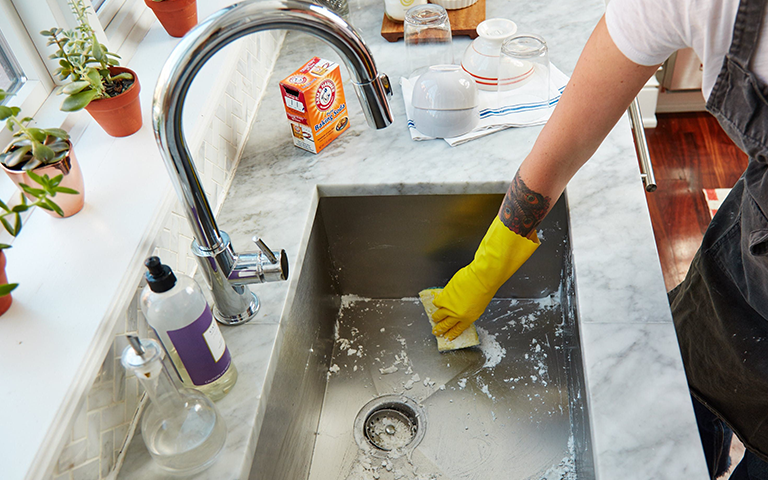
Baking soda can help loosen mild grime and absorb some odor near the drain opening. It works best for light buildup, not a serious clog or damaged pipe.
A small amount placed in the drain, followed by warm water, may help wash away soft residue. However, homeowners should avoid mixing drain products. Bleach, acids, and commercial cleaners can react in unsafe ways. If another product was used recently, adding a different cleaner is a poor idea.
Hot water can help with greasy film, but very hot water may not suit every pipe material or disposal setup. Warm water is a safer routine choice. If baking soda gives only short relief, the odor source may sit deeper in the trap, disposal, or drain line.
Manual Trap Cleaning Can Reach Settled Waste
Some odors stay because solid waste has settled inside the P-trap. In that case, manual cleaning may remove material that baking soda cannot reach. The trap sits below the sink and contains curved sections that may be opened for cleaning. Before work begins, clear the cabinet and place a container under the trap.
Dirty water and debris may spill when the connection opens. Because of that, care matters during removal and reassembly. The trap must be installed correctly afterward so water does not leak around the fittings.
Homeowners should avoid forcing old or corroded connections. Worn metal or plastic can crack during removal. A plumber can check the trap, nearby joints, and drain flow when access is difficult, or parts look weak.
When Cleaning Is No Longer Enough
A kitchen sink smell should improve when the true odor source is removed. However, repeated odor often signals something beyond surface dirt. A drain that keeps slowing down may hold grease or debris farther inside the line. Frequent gurgling may point toward vent trouble. Sewer odor that returns after the trap fills may require closer inspection.
Moisture under the cabinet deserves attention too. A small drain leak can keep wood and stored items damp for days. Property owners should watch how quickly the odor returns after cleaning. A smell that comes back within hours can provide useful clues. Good diagnosis matters because pouring more cleaner into the drain may hide the smell briefly without correcting the cause.
A+ 406 Waterworks provides septic inspections, septic tank pumping, drain cleaning, plumbing repairs, and odor troubleshooting for homeowners dealing with persistent sink smells or other wastewater concerns. Our experienced local team focuses on clear explanations, practical solutions, and dependable service tailored to each property’s needs. Call 406-555-0148 today to schedule an inspection or request help with stubborn sink odors.
Frequently Asked Questions
Why does a kitchen sink smell bad after being cleaned?
A kitchen sink can smell bad after cleaning because the visible bowl is only one part of the drain system. Grease, food film, and bacteria may remain under the splash guard, inside the garbage disposal, along the drain walls, or in the P-trap. A dry P-trap can also allow sewer gas to enter the room. Scrubbing the bowl alone will not remove these hidden sources. Clean the disposal guard, drain opening, and accessible parts carefully, then run water to refill the trap. If the odor returns quickly, drainage slows, or gurgling occurs, the problem may require professional plumbing inspection and repair.
Can a garbage disposal cause odor even when it still works?
Yes. A garbage disposal can operate normally while food particles, grease, and bacteria remain inside the grinding chamber or beneath the rubber splash guard. These hidden areas stay damp and can develop a strong odor. Turn off power before cleaning around the opening, then scrub both sides of the guard with warm, soapy water. Running cold water while using the disposal can help move food through the drain. Small amounts of ice or citrus may freshen some units, but follow the manufacturer’s guidance. If the disposal smells despite cleaning, drains slowly, leaks, or makes unusual sounds, you can get professional help from A+ 406 Waterworks.
Why does the smell get worse when water runs?
Running water can make a kitchen sink smell worse because it disturbs residue inside the P-trap or drain pipe and pushes trapped odors into the room. Water movement may also expose grease, food particles, or stagnant wastewater that has collected along the pipe walls. Gurgling during or after drainage can suggest poor venting, a partial blockage, or water movement in the trap. If the sink drains slowly at the same time, buildup is more likely. Avoid mixing drain chemicals while investigating. Persistent odor, repeated gurgling, or worsening drainage should be evaluated by a plumber to identify and correct the underlying cause.
Will baking soda remove every kitchen drain smell?
No. Baking soda may reduce mild odors and help loosen light residue near the drain opening, but it cannot solve every cause of a smelly kitchen sink. It will not repair a dry P-trap, blocked vent, corroded pipe, leaking connection, damaged disposal, or heavy clog. Use it only as a simple cleaning aid, and never mix it with bleach, acids, or commercial drain products. Warm water may help rinse away soft grease, but repeated treatments should not replace diagnosis. If the smell returns quickly or comes with slow drainage, gurgling, or moisture under the cabinet, you may need professional plumbing attention.
When should a plumber check a smelly kitchen sink?
A plumber should inspect a smelly kitchen sink when the odor keeps returning after thorough cleaning, drainage becomes slow, gurgling occurs, or water leaks beneath the cabinet. A sewer-like odor that remains after running water may indicate a trap, vent, or drain-line problem rather than surface buildup. A plumber can inspect the disposal, P-trap, drain connections, and nearby piping to locate the source. Professional help is also appropriate when fittings are corroded, difficult to remove, or damaged. Avoid repeatedly pouring chemical cleaners into the drain, since they may create safety risks or damage plumbing without correcting the underlying odor problem.
Can grease buildup make a kitchen sink smell even without a clog?
Yes. Grease can coat drain pipe walls without completely blocking the pipe. Small food pieces can stick to this greasy layer and remain there after water passes through. Because the buildup stays damp, bacteria may grow and create a sour or stale smell. The sink may still drain at a normal speed during the early stages. However, the opening can slowly become smaller as more grease collects. Warm water and basic cleaning may remove light residue near the opening. If odor keeps returning or drainage begins slowing, deeper buildup may require drain cleaning to remove material farther inside the plumbing line.
Why does the sink smell worse after sitting unused overnight?
A kitchen sink may smell stronger after sitting unused because no fresh water moves through the drain for several hours. Food residue, grease, and bacteria inside the disposal or drain can release stronger odors during that time. Moreover, a weak water seal inside the P-trap may allow sewer gas to enter the kitchen. This can happen when the trap loses water due to evaporation, leaks, or vent issues. Running water may reduce the smell if the trap simply needs refilling. However, odor that returns every morning, comes with gurgling, or continues after running water may point to a plumbing problem that needs inspection.